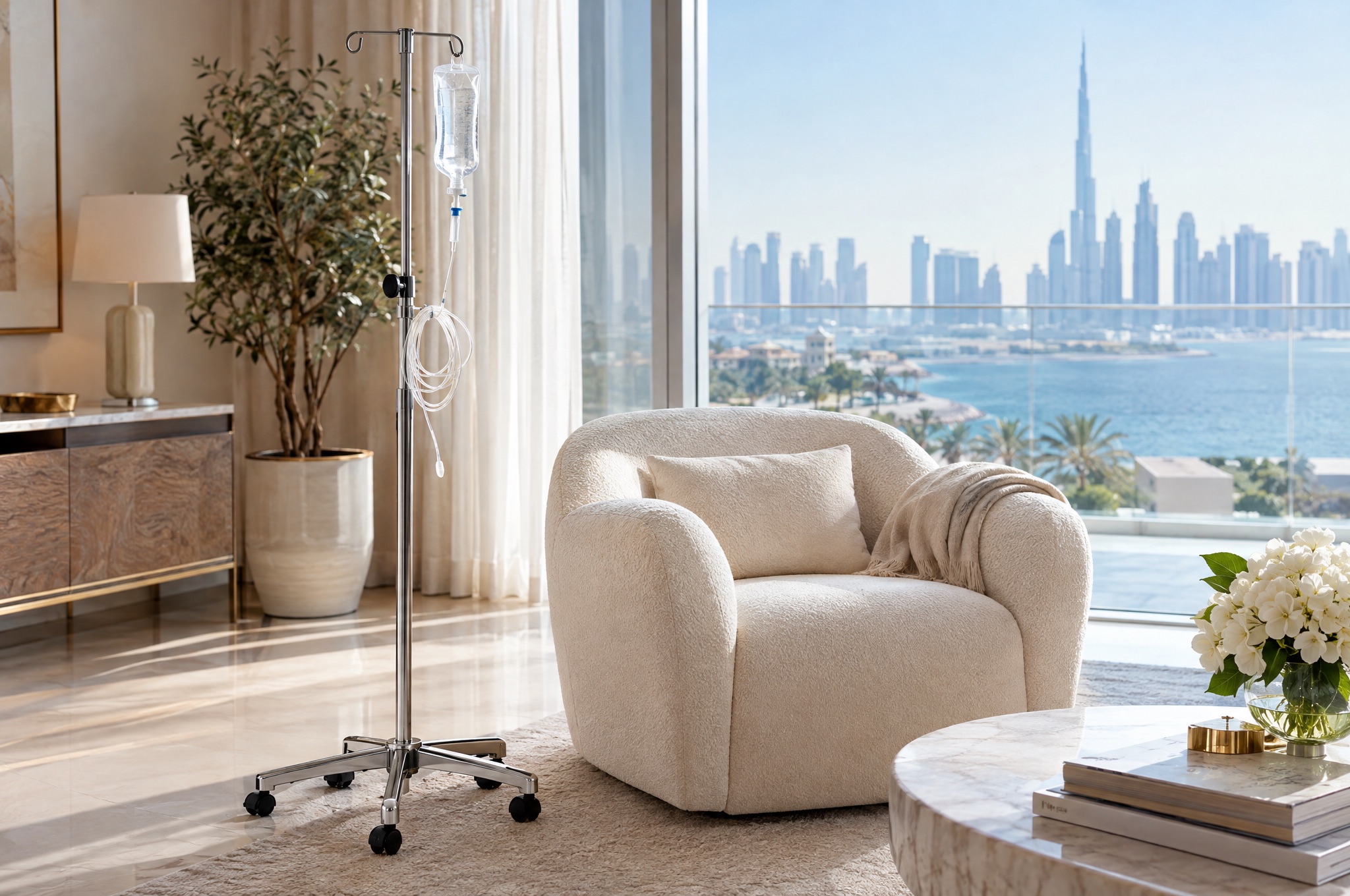
Why Dubai is the market for this
Dubai's wellness spend, hotel population and villa communities created the mobile IV category years ago, and demand has kept compounding: recovery drips, hydration, vitamin programmes, athletes, executives and post travel clients. The customer expects the service at home, at the office or in a hotel suite, and expects it within hours of booking.
What most would be founders miss is the regulatory frame. Every one of those drips is a clinical act. The businesses that last are the ones built as licensed medical operations from day one; the ones built as beauty services get closed.
The legal structure, in one paragraph
A compliant IV drip business in Dubai is a DHA licensed home care operation. The company holds a trade licence with the correct healthcare activity and a DHA home care licence, issued through the Sheryan portal, with IV therapy inside its approved scope. Licensed nurses administer every drip, a licensed medical director carries clinical oversight, and every preparation reaches you through licensed pharmacy and supply channels.
The build, step by step
Define the menu inside the approvable scope
Hydration, recovery and vitamin programmes sit differently from anything touching prescription medicines. The service menu decides the licence scope, the protocols and the sourcing, so it is settled first.
Form the company and secure the licence
A trade licence with the right activity, then the DHA home care licence through Sheryan. Foreign founders can own 100 percent, and you do not need a medical background: a licensed medical director carries the clinical accountability.
Recruit and credential the team
Nurses are individually licensed and credentialed under your operation. In a well built model they are paid per visit rather than kept on payroll, which keeps the cost base moving with revenue.
Contract licensed sourcing
IV preparations and consumables come through licensed pharmacy and medical supply channels, stored and handled correctly. This is the layer inspections look at hardest.
Write the protocols, then launch
Screening questionnaires, consent, administration procedures, adverse event handling and record keeping, all written to the authority's checklists. Then bookings open.
What the economics look like
The attractive part of this model is its cost shape. The clinical team scales per visit, the operation needs an approved base rather than a patient facing clinic, and the serviceable area is the whole city. The constraint to respect is clinical capacity: bookings only grow as fast as credentialed nurses join the roster, which is why recruitment and credentialing sit inside the build rather than after it.
Common ways founders get this wrong
- Launching as a spa or beauty brand. IV therapy marketed as a beauty treatment without a medical licence behind it is the category's most common shutdown story.
- Borrowing someone else's licence. Operating under another company's home care licence leaves you owning a brand with no business underneath it.
- Unlicensed staff. One unlicensed administration is enough to end the operation.
- Grey market sourcing. Preparations bought outside licensed channels put the licence, and patients, at risk.
Built properly, none of these risks survive the first month. That is the point of doing it turnkey: the licence, the team, the sourcing and the protocols arrive together, and the first booking lands on a business that can pass any inspection that follows it.